Get Adobe Flash player

SANSKRIT DICTIONARY

You can help us improve this dictionary by submitting words not listed by E-MAIL.

[A]

Abhinivesha
Clinging to life; the instinctive urge for survival at all costs; one of the Pancha Klesha (five “hindrances” to spiritual growth).

Acharya
A preceptor; a spiritual teacher, guide or leader.

Adhi
The highest; more subtle; sometimes refers to the mind.

Adhikarin
One who is considered fit to receive the teachings of yoga and capable of walking the spiritual path.

Advaita
Non-duality; oneness; the teaching that there is only “one reality” commonly referred to as atma or Brahman – as found in the Upanishads; see also Vedanta.

Agami Karma
"Karma yet to come." The result of acts performed during the present life which will mature in the normal course of events.

Agni
Vedic God of Fire

Ahankara
The ego; the false "I"; "I" am-ness. It is the self-arrogating principle "I" that is projected by the mind rather than the real self.

Ahimsa
Non-violence, in deed, word, and thought


Anahata Chakra
The fourth of the seven primary Chakras; Lit. “the centre (lotus) of unstruck sound”; it is associated with Vayu, the “air” element; physically related to the heart region and associated with the cardiac plexus and the thymus glands.

Ananda
Ineffable bliss; an unshakable joy; a feeling of contentment and well-being which results from the experience of the ultimate reality of Advaita, or oneness.

Anga
Limb. A fundamental category of the yogic path. See also "Ashtanga"

Anjaneyasana
Half moon pose. A back bend pose.

Antaranga
Denotes the “internal aspects” of yoga; from the roots: Antara, meaning “inner” and Anga, meaning “limb”; in Patanjali’s Classical Ashtanga Yoga system, it refers to the final three “limbs” of Dharana, Dhyana and Samadhi.

Apana
One of the type major forms of “Universal Energy” (along with Prana) that sustain the human organism; the lunar energy, whose primary characteristics are cooling, silvery, reflective, inhibiting and feminine.

Aparigraha
Non-possessiveness; non-greed. To be satisfied with the necessities and not wish for more. It also includes not accepting gifts that are given with a hope of receiving something in return. One of the 5 yamas.

Aprakasha Bindu
The respiratory centre (medulla oblongata) situated in the pons and medulla of the human brainstem; it governs autonomic breathing.

Asana
From the root Asi, which means “to be”; Lit. “a state of being”; refers to the physical poses or postures of Hatha Yoga; the third of sage Patanjali’s “eight limbs of yoga” (Ashtanga Yoga).

Ashram
A hermitage; the home or communal dwelling where spiritual teachings were imparted by a guru to his students. Chatus Ashrama (ashrama dharma): The four stages of life in the Vedic tradition, including brahmacari (student/disciple), grhastha (householder), vanaprastha (forest dweller), and sannyasi (renunciate).

Ashtanga Yoga
The eight limbs of yoga, as codified by Patanjali in the Yoga Sutras; consists of: Yama, Niyama, Asana, Pranayama, Pratyahara, Dharana, Dhyana, and Samadhi.

Asmita
Egoism; the false sense of the individual “I”; one of the Pancha Kleshas (five “hindrances” to spiritual growth)

Asteya
Non-stealing, non-coveting, and non hoarding. To not wish for what others have or take what does not belong to you. One of the 5 yamas.

Atman
The indwelling “Self”; the transcendental, eternal soul; the true nature or identity of man – the innermost essence, which is identical with Brahman (God); also referred to as “param-atman.”

Avidya
Ignorance; mistaking the false for the true, or vice versa; one of the Pancha Kleshas (five “hindrances” to spiritual growth); said to be the “mother klesha” from which all others spring forth; the root cause of all suffering.

Ayurveda
One of India’s two traditional systems of medicine (the other is the siddha medical system of South India).

[B]

Bahiranga
From the roots Bahihi, meaning “outer”, and Anga, meaning “limb”; the “externalized” aspects, or “outer limbs” of yoga; in Patanjali’s Classical Ashtanga Yoga system, this refers to the first five “limbs” of Yama, Niyama, Asana, Pranayama, and Pratyahara.

Bhagavad Gita
The most famous scripture of Indian history. Embedded within the great Indian epic, Mahabharata, it is the conversation between Lord Krishna and Prince Arjuna, which took place on the battlefield of Kurukshetra before the commencement of the great battle. It is comprised of eighteen chapters, wherein Lord Krishna instructs the warrior prince on the proper yogic attitude to take towards every human crisis. Within these teachings are explanations on Karma Yoga (selfless action), Bhakti Yoga (devotion), Jnana Yoga (knowledge/wisdom) and Sannyasa Yoga (renunciation), along with the principles of Transcendental Mind (Vijnana Yoga), devotional service to the Absolute (Taraka-Brahma Yoga), the principles of meditation (Dhyana Yoga), and the principles of the Divine Manifestation and its extensions (Vibhuti Yoga).

Bhajan
Devotional music (song); hymns in praise of the Divine.

Bandha
To bind; restrict; lock; to hold together

Bhakti
A person practicing Bhakti Yoga.

Bhakti
Devotion; from the root Bhaj, which means “to be attached to God”; Lit. “Attachment to the worship of God”; signifies a supreme love of God, and is displayed as the flow of uninterrupted thoughts toward the Divine. Bhakti Yoga is the spiritual discipline of “love and devotion” as a means for evolution, as expounded , for instance, in the Bhagavad Gita and other scriptures; the seminal work on Bhakti Yoga is the Naradha Bhakti Sutras, by Veda Vyasa.

Bija
Seed sound; source; a “single unit” sound that has infinite potential.

Brahman
The absolute reality; the supreme, indivisible, infinite, all-pervading, eternal existence; cosmic consciousness; God.

Brahmarandhra
Psychic aperture at the crown of the head

Buddhi
Higher intellect; the seat of wisdom and understanding

Bhuja
Arm or shoulder

Bhujangasana
Cobra posture

Brahmacharya
Non-indulgence, abstinence, and moderation. Also describes the first stage in a person's four stages of life in which one dedicates his life to study.

[C]

Chakra
Lit: “wheel”; the psycho-energetic centers of the subtle body known as the Pranamayakosha; in yoga there are considered to be twelve major chakras, six higher, and six lower. However, the six higher chakras are typically group as one. Thus seven chakras are commonly spoken of. They are Muladhara Chakra at the base of the spine, Svadhishstana Chakra at the genitals, Manipura Chakra at the navel, Anahata Chakra at the heart, Vishuddha Chakra at the throat, Ajna Chakra the forehead, and Sahasrara Chakra (comprised of the six higher chakras) at the top of the head.

Chela
Student; pupil; disciple of a guru.

Chitta
The storehouse of memories and experiences; the unconscious (subconscious) part of mind, filled with Samskaras (conditioned thoughts, repeated actions, habits, instincts, etc); mind stuff.

[D]

Dakshina
Donation; offering of gratitude to the guru (also known as Guru Dakshina); right (side); southern; auspicious.

Darshan
holy sight or vision; reverent vision or view (of a guru, idol, etc).

Deva
God; celestial being.

Dharana
From the root Dhar, which means to “bind together”, “to make stable”; Lit. “that which gives stability”; the willful act of concentration of the mind; the sixth of Patanjali’s “eight limbs of yoga” (Ashtanga Yoga).

Dharma
From the root Dhar, which means “stability, sturdiness”; cosmic laws/principles; the law(s) of nature; that which upholds the Universe; implies the proper action, right use of everything.

Dhyana
Meditation; the seventh of Patanjali’s “eight limbs of Yoga” (Ashtanga Yoga); mystic absorption.

Dosha
In Ayurveda, refers to the three biological humors, Vata, Pitta, and Kapha; defect; fault; impediment

Drishti
The focal point of the eyes. This can be a point outside of the body to help with balancing poses or a point inside the body, such as the third eye, to focus on during meditation.

Dvaitam
Duality

Dvesha
aversion; repulsion to objects (or persons) of the material world; one of the Pancha Kleshas (five “hindrances” to spiritual growth)

[E]

[F]

[G]

Guru
the syllable Gu signifies “light”, and the Ru signifies “the destroyer of darkness”; Lit. “the light that destroys darkness”; one who leads from darkness into the light; the dispeller (destroyer) of darkness (ignorance); The illuminator: one who brings (the light of) wisdom.

Guru-Chela
refers to the teacher-student relationship.

Gurukula
Lit. “the womb of the guru; the home/hermitage of the guru where students lived while being guided along the spiritual path under the watchful eye of the master.

[H]
Hamsa Kumbhaka
Swan breath. A pranayama technique used during meditation to guide the energy up the spine.

[I]

Indra
chief of the Devaloka (Godly realm); the lord of the senses; the mind or soul Inner yoga-s (see Antaranga Yoga).

Ishvara Pranidhana
surrender to the will of the Supreme (God); one of the Pancha Niyamas (ethical observances), in Sage Patanjali’s Ashtanga Yoga.

[J]

Jatti
Lit. “a small unit of movement for a specific purpose”; simple (body) movements.

Jiva
a.k.a. “Jivatman” or “Atman”; the soul; the individual self; the individuated consciousness.

Jivan Mukti
the state of liberation while still in bodily, human form; an adept who has attained liberation (Moksha) while still embodied is known as Jivan Mukta.

Jnana
knowledge; wisdom

Jnana Yoga Kriyas
a class of yoga practices for deep relaxation, which belong to the branch of yoga called Jnana Yoga.

[K]

Kali Yuga
the last of the four Yugas, or ages, which began in 3102 BC with the death of Lord Krishna. It is characterized as a time of “darkness” in which mankind has sunk to its lowest level of consciousness.

Kapha
one of biological humors in Ayurveda; phlegm.

Karma
from the roots Kar, meaning “action”, and Ma, meaning “my”; Lit. “my action”; three categories of karma are: Adhyatmika (That which comes form the self), Adhibhautika (that which arises from the world outside the self), and Adhidaivika (that which results from birth circumstances); karma is of three types: Prarubdha (from birth), Kriyamana (that which we consciously create), and Sanchita (that which we unconsciously create – through ignorance).

Klesha
hindrance (to spiritual evolution/progress); Lit. “knot of the heart”, or “impurities of the heart,” which hinder spiritual growth and higher realizations.

Kriya
a physical action such as seen in Basti, Neti and Nauli. The intent is a cleansing effect of one sort or another via the movement of blood, nervous energy, lymph or subtle Prana; a preparatory practice.

Kundalini
a potent energy that lies in “3 ½ coils” at the base of the spine (the Kanda). This energy is the essence of all the functions of “consciousness” in humans, and all that enlivens the human life is a function of kundalini energy.

[L]

[M]

Manas
Conscious mind; thought; the mental vehicle

Mantra
from the roots Man, which means “mind”, and Tra, which means “tool”; Lit. “a tool of the mind”; a Divinely charged sound; verbal or non-verbal utterances which unite the sub-consciousness, consciousness, and super-consciousness; 3 forms of mantra: Likhita (written form, in silence, while concentrating inwardly on the meaning of the mantra), Vajikha (spoken or chanted), Manacikha/Ajapa (internal or mental).

Mauna
silence.

Moksha
liberation; the complete freedom from the human sense of limitation, incompleteness, inadequacy.

Mudra
gesture; seal; from the root Mud, which means “to commune; to bring together; to bring pleasure to”; Lit. “joining (of the Lower Self with the Higher Self)”; though these are mainly thought of as specific hand positions, they can take form using many body parts and positions.

Mukti
liberation; freedom from the bonds of Karma, and hence, the cycle of birth and re-birth; Sadyo Mukti – instant liberation; Krama Mukti – gradual liberation

[N]

Nadi
channel; river; Prana Nadi – refers to channels of subtle energy (Prana) flow within the Pranamaya Kosha.

Niyama
ethical observances; the second of Patanjali’s “eight limbs of Yoga” (Ashtanga Yoga); the cultivation of certain higher qualities, a process which leads to the dissociation from that which is not the “True Self.”

[O]

[P]

Pancha Klesha
the “five hindrances” to spiritual growth: Avidya (ignorance), Asmita (egoism), Abhinivesha (clinging to life), Raga (cravings), Dwesha (aversions); also considered the “five roots” of all problems of human existence; the motivating factors which drive humans to act in such ways as to produce and perpetuate Karma.

Pancha Kosha
the “five bodies,” or discernible “aspects” of man, arranged successively from the grosser to the increasingly more subtle. They are Annamayakosha (the physical tissues or the cellular structure), the Pranamayakosha (the ‘energy sheath’), the Manomayakosha (mental sheath), Vijnanamayakosha (the sheath of higher intellect), and the Anandamayakosha (the body of ‘Cosmic Consciousness’).

Pitta
bile; one of the three biological humors in Ayurveda.

Prakriya
a method of action; a technique

Pranava
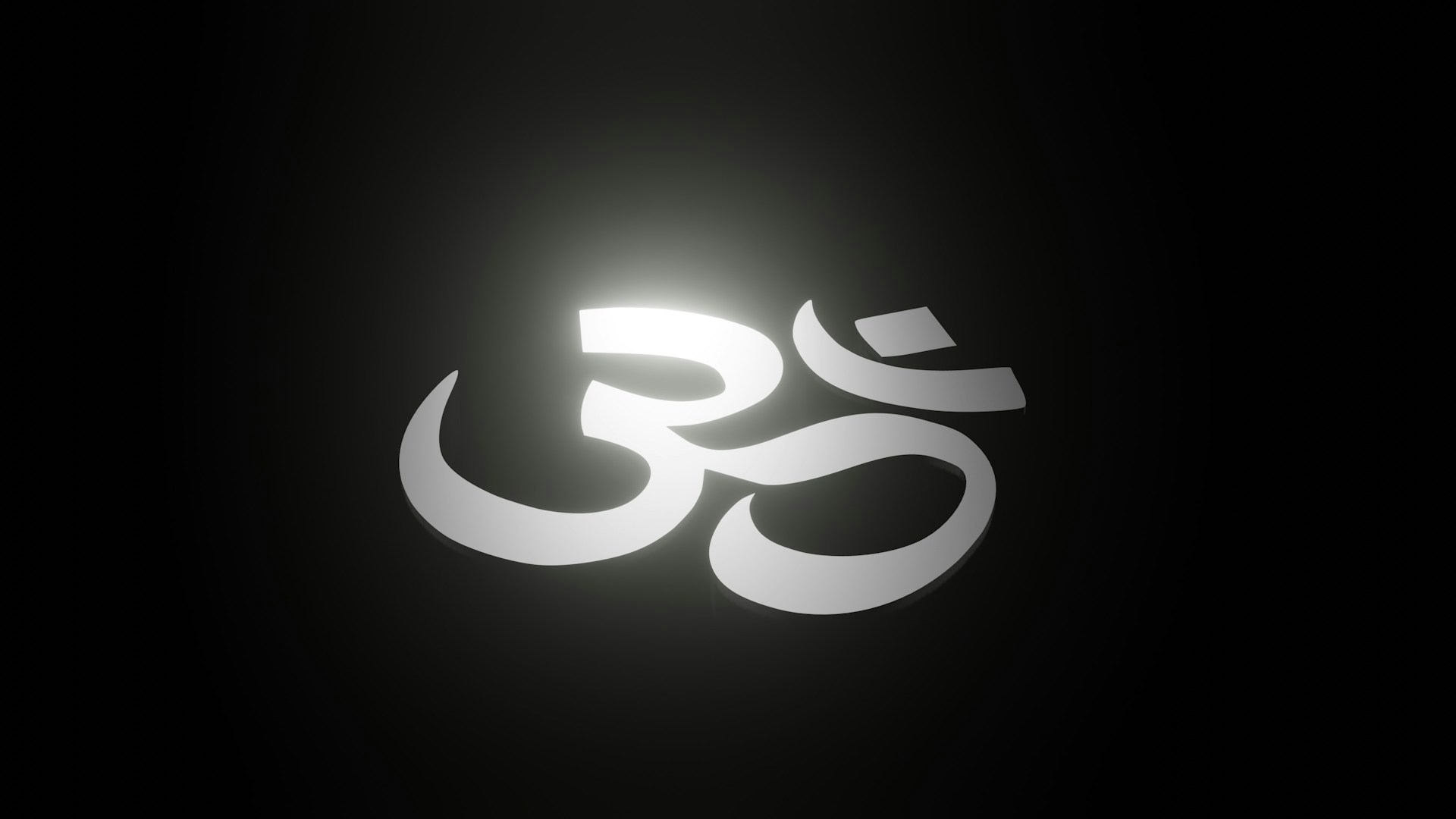
the cosmic sound “AUM”; considered to be the “Mantra of Mantras”; from the roots Pra (pre), and Nava (new); Lit. “that which existed before anything (that is new)”, or “that which existed before existence itself”; according to the Nada Bindu Upanishad, it consists of 3 ½ measures: one for each of the Bijas (Aa, Uu and Mm), with the additional half-measure as the ending “nasalized” echo sound of the “Mm”.

Pranayama
the practice of breath control as a conscious attempt to stabilize the flows of Prana and Apana (whose dynamic movements are intimately linked to the breath), and bring them into a state of “polarity” or “harmonious interaction”; the fourth of Patanjali’s “eight limbs of yoga” (Ashtanga Yoga) Pratyahara withdrawal of the senses; the fifth of Patanjali’s “eight limbs of Yoga” (Ashtanga Yoga)

Pratyahara
withdrawal of the senses; the fifth of Patanjali’s “eight limbs of Yoga” (Ashtanga Yoga)

[Q]

[R]

Raga
craving; attraction and attachment to experiences and objects of the material world; exterior attachments; passion; desire, emotions/feelings; one of the Pancha Kleshas (five “hindrances” to spiritual growth).

Rajas
one of the three Gunas (qualities) that comprise the manifest universe; characteristics: active; lightness; energetic; constantly mobile; ambitious; propelled by desire for dominance and power.

Rasana
tongue; the organ of taste.

Rishi
Lit, “seer”; one who sees; the great sages of ancient India who, in deep states of meditation (communion with the cosmos), and through spiritual experimentation, discovered the underlying, fundamental truths of the Universe, and whose teachings formed the basis for the spiritual culture of the ancient Vedic civilization.

Rupa
form; shape; appearance; sight; vision

[S]

Sadhaka
spiritual aspirant; seeker of the highest truth; student on the spiritual path.

Sama
same; equal; tranquility; mental calmness; equanimity

Samadhi
super consciousness; complete absorption into the absolute, Universal Consciousness; the separation of Manas (mind) from the body, and its union with the Paramatma (Universal Consciousness, God); the complete “forgetting” of the “small self” (Jivatman) and mergence with the unchanging “higher self” (Paramatma) The eighth of Patanjali’s “eight limbs of Yoga” (Ashtanga Yoga).

Samskara
patterned or conditioned behaviours; subconscious tendencies; worldly life.

Samyama Yoga
that aspect of yoga comprised of the Antarangas, the final three stages of Patangali’s Ashtanga Yoga: Dharana, Dhyana and Samadhi.

Sankalpa
A committed resolution, definite intention, or desire of the will. A thought or idea based on interested motives, generally for one’s betterment.

Sanskrit
Lit. “composed, refined, made perfect”; the sacred and literary language of ancient India.

Satsanga
from the roots Sat (truth) and Sangha (spiritual community); Lit. “in the company of saints and sages (truth bearers)”; refers to a gathering in which teachings are imparted by a guru or spiritual master.

Sattva
one of the three Gunas (qualities) that comprise the manifest universe. Its characteristics are quietness; calmness; peacefulness; cleanliness.

Seva
service; action performed out of pure appreciation, love and gratitude.

Shakti
Lit. “power”; Kriya Shakti – power of action; Jnana Shakti – power of wisdom; Iccha Shakti – power of the will

Shastra
Lit. “that which commands and teaches”; the authoritative text (for a particular science, art, philosophy, etc); spiritual scripture.

Shat Karma Kriyas
the six purification actions: Dhauti, Vasti, Neti, Trataka, Nauli, Kapalabhati.

Sukham
feeling at ease; pleasant; relaxed; comfortable

Surya Namaskara
Lit. “salutation to the sun”; a dynamic kriya in Hatha Yoga which evolved from the vedic ritualistic worship of the sun. The practice, which is comprised of between 11 and 14 different positions, is derived from the traditional early morning ablutions of the Hindu Brahman (priest). There are 17 or more variation of the surya namaskara kriya commonly practiced.

Sushumna Nadi
the central channel, or nadi, in the subtle body (Pranamaya Kosha), along which the Chakras are located. It corresponds to the space occupied by the spinal chord in the physical body (Annamayakosha).

Svadhisthana Chakra
the second of the seven primary Chakras; from the root Sva, which means “self”. Lit. “the location of the self”, or “the lotus of one’s own abode”; associated with Apas, the “water” element; physically related to the pelvic region and associated with the hypogastric/pelvic plexus and the adrenal glands.

[T]

Tamas
one of the three Gunas (qualities) that comprise the manifest universe; the inert state; characteristics are dullness; inertia; laziness; immobility; darkness.

Tanmatra
rudimentary element; subtle elements; pancha tanmatra are the five root energies of smell, taste, sight, touch, and hearing.

[U]

Upanishads
the scriptures of Vedanta; texts dealing with the ultimate truths and its realization, as expounded in the Vedas. They are 108 in number, with 10 regarded as the principle Upanishads.

[V]

Vata
air; one of the three biological humors in Ayurveda.

Vedanta
Lit. “the end of the Vedas”; one of the Shat Darshan (six schools of spirituality in India); the philosophy of absolute monoism, reflected in the study of the philosophy and science contained within the Vedas, the Brahma Sutras, the Upanishads, and the Bhagavad Gita.

Vedas
the collective name for the sacred scriptures (or collection of hymns) of ancient India, which form the foundation of Hinduism. They are four in number: Rig-Veda, Yajur-Veda, Sama-Veda, and Atharva-Veda.

Vedic
of or pertaining to the Vedas, or Vedic period (4,000 – 6,000 BCE).

[W]

[X]

[Y]

Yama
ethical restraints; the first of Patanjali’s “eight limbs of Yoga” (Ashtanga Yoga).

Yantra
from the roots Yan, which means “change”, and Tra, which means “tool”; Lit. “a tool of (for) change”; the esoteric science of number, name and form; complex geometrical form used for meditation.

Yoga Drishthi
drishthi means “sight,” or to “see”; Yoga Drishthi is the yogic view; perception according to the yogic way of understanding or viewing reality.

Yoga Sutras
the classic yogic text of Ashtanga Yoga, written by sage Patanjali. It consists of 196 aphorism, outlining the 8 stages of yoga (Ashtanga Yoga).

Yoga Vidya
the science of yoga; yogic knowledge.

[Z]


Acknowledgments: This dictionary was originally created from information from http://www.discover-yoga-online.com/. [A]

Abhinivesha
Clinging to life; the instinctive urge for survival at all costs; one of the Pancha Klesha (five “hindrances” to spiritual growth).

Acharya
A preceptor; a spiritual teacher, guide or leader.

Adhi
The highest; more subtle; sometimes refers to the mind.

Adhikarin
One who is considered fit to receive the teachings of yoga and capable of walking the spiritual path.

Advaita
Non-duality; oneness; the teaching that there is only “one reality” commonly referred to as atma or Brahman – as found in the Upanishads; see also Vedanta.

Agami Karma
"Karma yet to come." The result of acts performed during the present life which will mature in the normal course of events.

Agni
Vedic God of Fire

Ahankara
The ego; the false "I"; "I" am-ness. It is the self-arrogating principle "I" that is projected by the mind rather than the real self.

Ahimsa
Non-violence, in deed, word, and thought


Anahata Chakra
The fourth of the seven primary Chakras; Lit. “the centre (lotus) of unstruck sound”; it is associated with Vayu, the “air” element; physically related to the heart region and associated with the cardiac plexus and the thymus glands.

Ananda
Ineffable bliss; an unshakable joy; a feeling of contentment and well-being which results from the experience of the ultimate reality of Advaita, or oneness.

Anga
Limb. A fundamental category of the yogic path. See also "Ashtanga"

Anjaneyasana
Half moon pose. A back bend pose.

Antaranga
Denotes the “internal aspects” of yoga; from the roots: Antara, meaning “inner” and Anga, meaning “limb”; in Patanjali’s Classical Ashtanga Yoga system, it refers to the final three “limbs” of Dharana, Dhyana and Samadhi.

Apana
One of the type major forms of “Universal Energy” (along with Prana) that sustain the human organism; the lunar energy, whose primary characteristics are cooling, silvery, reflective, inhibiting and feminine.

Aparigraha
Non-possessiveness; non-greed. To be satisfied with the necessities and not wish for more. It also includes not accepting gifts that are given with a hope of receiving something in return. One of the 5 yamas.

Aprakasha Bindu
The respiratory centre (medulla oblongata) situated in the pons and medulla of the human brainstem; it governs autonomic breathing.

Asana
From the root Asi, which means “to be”; Lit. “a state of being”; refers to the physical poses or postures of Hatha Yoga; the third of sage Patanjali’s “eight limbs of yoga” (Ashtanga Yoga).

Ashram
A hermitage; the home or communal dwelling where spiritual teachings were imparted by a guru to his students. Chatus Ashrama (ashrama dharma): The four stages of life in the Vedic tradition, including brahmacari (student/disciple), grhastha (householder), vanaprastha (forest dweller), and sannyasi (renunciate).

Ashtanga Yoga
The eight limbs of yoga, as codified by Patanjali in the Yoga Sutras; consists of: Yama, Niyama, Asana, Pranayama, Pratyahara, Dharana, Dhyana, and Samadhi.

Asmita
Egoism; the false sense of the individual “I”; one of the Pancha Kleshas (five “hindrances” to spiritual growth)

Asteya
Non-stealing, non-coveting, and non hoarding. To not wish for what others have or take what does not belong to you. One of the 5 yamas.

Atman
The indwelling “Self”; the transcendental, eternal soul; the true nature or identity of man – the innermost essence, which is identical with Brahman (God); also referred to as “param-atman.”

Avidya
Ignorance; mistaking the false for the true, or vice versa; one of the Pancha Kleshas (five “hindrances” to spiritual growth); said to be the “mother klesha” from which all others spring forth; the root cause of all suffering.

Ayurveda
One of India’s two traditional systems of medicine (the other is the siddha medical system of South India).

[B]

Bahiranga
From the roots Bahihi, meaning “outer”, and Anga, meaning “limb”; the “externalized” aspects, or “outer limbs” of yoga; in Patanjali’s Classical Ashtanga Yoga system, this refers to the first five “limbs” of Yama, Niyama, Asana, Pranayama, and Pratyahara.

Bhagavad Gita
The most famous scripture of Indian history. Embedded within the great Indian epic, Mahabharata, it is the conversation between Lord Krishna and Prince Arjuna, which took place on the battlefield of Kurukshetra before the commencement of the great battle. It is comprised of eighteen chapters, wherein Lord Krishna instructs the warrior prince on the proper yogic attitude to take towards every human crisis. Within these teachings are explanations on Karma Yoga (selfless action), Bhakti Yoga (devotion), Jnana Yoga (knowledge/wisdom) and Sannyasa Yoga (renunciation), along with the principles of Transcendental Mind (Vijnana Yoga), devotional service to the Absolute (Taraka-Brahma Yoga), the principles of meditation (Dhyana Yoga), and the principles of the Divine Manifestation and its extensions (Vibhuti Yoga).

Bhajan
Devotional music (song); hymns in praise of the Divine.

Bandha
To bind; restrict; lock; to hold together

Bhakti
A person practicing Bhakti Yoga.

Bhakti
Devotion; from the root Bhaj, which means “to be attached to God”; Lit. “Attachment to the worship of God”; signifies a supreme love of God, and is displayed as the flow of uninterrupted thoughts toward the Divine. Bhakti Yoga is the spiritual discipline of “love and devotion” as a means for evolution, as expounded , for instance, in the Bhagavad Gita and other scriptures; the seminal work on Bhakti Yoga is the Naradha Bhakti Sutras, by Veda Vyasa.

Bija
Seed sound; source; a “single unit” sound that has infinite potential.

Brahman
The absolute reality; the supreme, indivisible, infinite, all-pervading, eternal existence; cosmic consciousness; God.

Brahmarandhra
Psychic aperture at the crown of the head

Buddhi
Higher intellect; the seat of wisdom and understanding

Bhuja
Arm or shoulder

Bhujangasana
Cobra posture

Brahmacharya
Non-indulgence, abstinence, and moderation. Also describes the first stage in a person's four stages of life in which one dedicates his life to study.

[C]

Chakra
Lit: “wheel”; the psycho-energetic centers of the subtle body known as the Pranamayakosha; in yoga there are considered to be twelve major chakras, six higher, and six lower. However, the six higher chakras are typically group as one. Thus seven chakras are commonly spoken of. They are Muladhara Chakra at the base of the spine, Svadhishstana Chakra at the genitals, Manipura Chakra at the navel, Anahata Chakra at the heart, Vishuddha Chakra at the throat, Ajna Chakra the forehead, and Sahasrara Chakra (comprised of the six higher chakras) at the top of the head.

Chela
Student; pupil; disciple of a guru.

Chitta
The storehouse of memories and experiences; the unconscious (subconscious) part of mind, filled with Samskaras (conditioned thoughts, repeated actions, habits, instincts, etc); mind stuff.

[D]

Dakshina
Donation; offering of gratitude to the guru (also known as Guru Dakshina); right (side); southern; auspicious.

Darshan
holy sight or vision; reverent vision or view (of a guru, idol, etc).

Deva
God; celestial being.

Dharana
From the root Dhar, which means to “bind together”, “to make stable”; Lit. “that which gives stability”; the willful act of concentration of the mind; the sixth of Patanjali’s “eight limbs of yoga” (Ashtanga Yoga).

Dharma
From the root Dhar, which means “stability, sturdiness”; cosmic laws/principles; the law(s) of nature; that which upholds the Universe; implies the proper action, right use of everything.

Dhyana
Meditation; the seventh of Patanjali’s “eight limbs of Yoga” (Ashtanga Yoga); mystic absorption.

Dosha
In Ayurveda, refers to the three biological humors, Vata, Pitta, and Kapha; defect; fault; impediment

Drishti
The focal point of the eyes. This can be a point outside of the body to help with balancing poses or a point inside the body, such as the third eye, to focus on during meditation.

Dvaitam
Duality

Dvesha
aversion; repulsion to objects (or persons) of the material world; one of the Pancha Kleshas (five “hindrances” to spiritual growth)

[E]

[F]

[G]

Guru
the syllable Gu signifies “light”, and the Ru signifies “the destroyer of darkness”; Lit. “the light that destroys darkness”; one who leads from darkness into the light; the dispeller (destroyer) of darkness (ignorance); The illuminator: one who brings (the light of) wisdom.

Guru-Chela
refers to the teacher-student relationship.

Gurukula
Lit. “the womb of the guru; the home/hermitage of the guru where students lived while being guided along the spiritual path under the watchful eye of the master.

[H]
Hamsa Kumbhaka
Swan breath. A pranayama technique used during meditation to guide the energy up the spine.

[I]

Indra
chief of the Devaloka (Godly realm); the lord of the senses; the mind or soul Inner yoga-s (see Antaranga Yoga).

Ishvara Pranidhana
surrender to the will of the Supreme (God); one of the Pancha Niyamas (ethical observances), in Sage Patanjali’s Ashtanga Yoga.

[J]

Jatti
Lit. “a small unit of movement for a specific purpose”; simple (body) movements.

Jiva
a.k.a. “Jivatman” or “Atman”; the soul; the individual self; the individuated consciousness.

Jivan Mukti
the state of liberation while still in bodily, human form; an adept who has attained liberation (Moksha) while still embodied is known as Jivan Mukta.

Jnana
knowledge; wisdom

Jnana Yoga Kriyas
a class of yoga practices for deep relaxation, which belong to the branch of yoga called Jnana Yoga.

[K]

Kali Yuga
the last of the four Yugas, or ages, which began in 3102 BC with the death of Lord Krishna. It is characterized as a time of “darkness” in which mankind has sunk to its lowest level of consciousness.

Kapha
one of biological humors in Ayurveda; phlegm.

Karma
from the roots Kar, meaning “action”, and Ma, meaning “my”; Lit. “my action”; three categories of karma are: Adhyatmika (That which comes form the self), Adhibhautika (that which arises from the world outside the self), and Adhidaivika (that which results from birth circumstances); karma is of three types: Prarubdha (from birth), Kriyamana (that which we consciously create), and Sanchita (that which we unconsciously create – through ignorance).

Klesha
hindrance (to spiritual evolution/progress); Lit. “knot of the heart”, or “impurities of the heart,” which hinder spiritual growth and higher realizations.

Kriya
a physical action such as seen in Basti, Neti and Nauli. The intent is a cleansing effect of one sort or another via the movement of blood, nervous energy, lymph or subtle Prana; a preparatory practice.

Kundalini
a potent energy that lies in “3 ½ coils” at the base of the spine (the Kanda). This energy is the essence of all the functions of “consciousness” in humans, and all that enlivens the human life is a function of kundalini energy.

[L]

[M]

Manas
Conscious mind; thought; the mental vehicle

Mantra
from the roots Man, which means “mind”, and Tra, which means “tool”; Lit. “a tool of the mind”; a Divinely charged sound; verbal or non-verbal utterances which unite the sub-consciousness, consciousness, and super-consciousness; 3 forms of mantra: Likhita (written form, in silence, while concentrating inwardly on the meaning of the mantra), Vajikha (spoken or chanted), Manacikha/Ajapa (internal or mental).

Mauna
silence.

Moksha
liberation; the complete freedom from the human sense of limitation, incompleteness, inadequacy.

Mudra
gesture; seal; from the root Mud, which means “to commune; to bring together; to bring pleasure to”; Lit. “joining (of the Lower Self with the Higher Self)”; though these are mainly thought of as specific hand positions, they can take form using many body parts and positions.

Mukti
liberation; freedom from the bonds of Karma, and hence, the cycle of birth and re-birth; Sadyo Mukti – instant liberation; Krama Mukti – gradual liberation

[N]

Nadi
channel; river; Prana Nadi – refers to channels of subtle energy (Prana) flow within the Pranamaya Kosha.

Niyama
ethical observances; the second of Patanjali’s “eight limbs of Yoga” (Ashtanga Yoga); the cultivation of certain higher qualities, a process which leads to the dissociation from that which is not the “True Self.”

[O]

[P]

Pancha Klesha
the “five hindrances” to spiritual growth: Avidya (ignorance), Asmita (egoism), Abhinivesha (clinging to life), Raga (cravings), Dwesha (aversions); also considered the “five roots” of all problems of human existence; the motivating factors which drive humans to act in such ways as to produce and perpetuate Karma.

Pancha Kosha
the “five bodies,” or discernible “aspects” of man, arranged successively from the grosser to the increasingly more subtle. They are Annamayakosha (the physical tissues or the cellular structure), the Pranamayakosha (the ‘energy sheath’), the Manomayakosha (mental sheath), Vijnanamayakosha (the sheath of higher intellect), and the Anandamayakosha (the body of ‘Cosmic Consciousness’).

Pitta
bile; one of the three biological humors in Ayurveda.

Prakriya
a method of action; a technique

Pranava
the cosmic sound “AUM”; considered to be the “Mantra of Mantras”; from the roots Pra (pre), and Nava (new); Lit. “that which existed before anything (that is new)”, or “that which existed before existence itself”; according to the Nada Bindu Upanishad, it consists of 3 ½ measures: one for each of the Bijas (Aa, Uu and Mm), with the additional half-measure as the ending “nasalized” echo sound of the “Mm”.

Pranayama
the practice of breath control as a conscious attempt to stabilize the flows of Prana and Apana (whose dynamic movements are intimately linked to the breath), and bring them into a state of “polarity” or “harmonious interaction”; the fourth of Patanjali’s “eight limbs of yoga” (Ashtanga Yoga) Pratyahara withdrawal of the senses; the fifth of Patanjali’s “eight limbs of Yoga” (Ashtanga Yoga)

Pratyahara
withdrawal of the senses; the fifth of Patanjali’s “eight limbs of Yoga” (Ashtanga Yoga)

[Q]

[R]

Raga
craving; attraction and attachment to experiences and objects of the material world; exterior attachments; passion; desire, emotions/feelings; one of the Pancha Kleshas (five “hindrances” to spiritual growth).

Rajas
one of the three Gunas (qualities) that comprise the manifest universe; characteristics: active; lightness; energetic; constantly mobile; ambitious; propelled by desire for dominance and power.

Rasana
tongue; the organ of taste.

Rishi
Lit, “seer”; one who sees; the great sages of ancient India who, in deep states of meditation (communion with the cosmos), and through spiritual experimentation, discovered the underlying, fundamental truths of the Universe, and whose teachings formed the basis for the spiritual culture of the ancient Vedic civilization.

Rupa
form; shape; appearance; sight; vision

[S]

Sadhaka
spiritual aspirant; seeker of the highest truth; student on the spiritual path.

Sama
same; equal; tranquility; mental calmness; equanimity

Samadhi
super consciousness; complete absorption into the absolute, Universal Consciousness; the separation of Manas (mind) from the body, and its union with the Paramatma (Universal Consciousness, God); the complete “forgetting” of the “small self” (Jivatman) and mergence with the unchanging “higher self” (Paramatma) The eighth of Patanjali’s “eight limbs of Yoga” (Ashtanga Yoga).

Samskara
patterned or conditioned behaviours; subconscious tendencies; worldly life.

Samyama Yoga
that aspect of yoga comprised of the Antarangas, the final three stages of Patangali’s Ashtanga Yoga: Dharana, Dhyana and Samadhi.

Sankalpa
A committed resolution, definite intention, or desire of the will. A thought or idea based on interested motives, generally for one’s betterment.

Sanskrit
Lit. “composed, refined, made perfect”; the sacred and literary language of ancient India.

Satsanga
from the roots Sat (truth) and Sangha (spiritual community); Lit. “in the company of saints and sages (truth bearers)”; refers to a gathering in which teachings are imparted by a guru or spiritual master.

Sattva
one of the three Gunas (qualities) that comprise the manifest universe. Its characteristics are quietness; calmness; peacefulness; cleanliness.

Seva
service; action performed out of pure appreciation, love and gratitude.

Shakti
Lit. “power”; Kriya Shakti – power of action; Jnana Shakti – power of wisdom; Iccha Shakti – power of the will

Shastra
Lit. “that which commands and teaches”; the authoritative text (for a particular science, art, philosophy, etc); spiritual scripture.

Shat Karma Kriyas
the six purification actions: Dhauti, Vasti, Neti, Trataka, Nauli, Kapalabhati.

Sukham
feeling at ease; pleasant; relaxed; comfortable

Surya Namaskara
Lit. “salutation to the sun”; a dynamic kriya in Hatha Yoga which evolved from the vedic ritualistic worship of the sun. The practice, which is comprised of between 11 and 14 different positions, is derived from the traditional early morning ablutions of the Hindu Brahman (priest). There are 17 or more variation of the surya namaskara kriya commonly practiced.

Sushumna Nadi
the central channel, or nadi, in the subtle body (Pranamaya Kosha), along which the Chakras are located. It corresponds to the space occupied by the spinal chord in the physical body (Annamayakosha).

Svadhisthana Chakra
the second of the seven primary Chakras; from the root Sva, which means “self”. Lit. “the location of the self”, or “the lotus of one’s own abode”; associated with Apas, the “water” element; physically related to the pelvic region and associated with the hypogastric/pelvic plexus and the adrenal glands.

[T]

Tamas
one of the three Gunas (qualities) that comprise the manifest universe; the inert state; characteristics are dullness; inertia; laziness; immobility; darkness.

Tanmatra
rudimentary element; subtle elements; pancha tanmatra are the five root energies of smell, taste, sight, touch, and hearing.

[U]

Upanishads
the scriptures of Vedanta; texts dealing with the ultimate truths and its realization, as expounded in the Vedas. They are 108 in number, with 10 regarded as the principle Upanishads.

[V]

Vata
air; one of the three biological humors in Ayurveda.

Vedanta
Lit. “the end of the Vedas”; one of the Shat Darshan (six schools of spirituality in India); the philosophy of absolute monoism, reflected in the study of the philosophy and science contained within the Vedas, the Brahma Sutras, the Upanishads, and the Bhagavad Gita.

Vedas
the collective name for the sacred scriptures (or collection of hymns) of ancient India, which form the foundation of Hinduism. They are four in number: Rig-Veda, Yajur-Veda, Sama-Veda, and Atharva-Veda.

Vedic
of or pertaining to the Vedas, or Vedic period (4,000 – 6,000 BCE).

[W]

[X]

[Y]

Yama
ethical restraints; the first of Patanjali’s “eight limbs of Yoga” (Ashtanga Yoga).

Yantra
from the roots Yan, which means “change”, and Tra, which means “tool”; Lit. “a tool of (for) change”; the esoteric science of number, name and form; complex geometrical form used for meditation.

Yoga Drishthi
drishthi means “sight,” or to “see”; Yoga Drishthi is the yogic view; perception according to the yogic way of understanding or viewing reality.

Yoga Sutras
the classic yogic text of Ashtanga Yoga, written by sage Patanjali. It consists of 196 aphorism, outlining the 8 stages of yoga (Ashtanga Yoga).

Yoga Vidya
the science of yoga; yogic knowledge.

[Z]


Acknowledgments: This dictionary was originally created from information from http://www.discover-yoga-online.com/.